Sunday, October 13, 2013

Week 2: Math and Art


This week I learned about the influence math has had on art. Math (like science) and arts have been intertwined since the beginning. Take the above artwork from the Tomb of Ti. Notice how there is one figure that is much larger than the others. In Ancient Art, size was an indication of importance, not necessarily true to life or for depth perception yet (Met Museum).  Although this is a very simple idea, math’s incorporation into art in the beginning was simple. Over time, as math’s application to arts became more complex, so did the artworks.


A great example is the artwork above, the School of Athens by Raphael. Reinaissance Art, I feel, epitomizes how far along math had been integrated into producing artworks. In this art piece, you can see the full effects of perspective. In the artwork, the lines on the floor tiles and the pillars all meet at a single point in the piece (Tyler). This mimics how we see the world and creates the illusion of depth within a 2d surface). This mathematical system of using lines to create realistic-looking depth is called linear perspective (Babick).


Throughout history, math was used to help reinforce particular parts of art. It was never the focus. An analogy I like to use is that math is the mayonnaise of the art sandwich. While mayo adds to the sandwich, it doesn't make up the main components of a sandwich. However, in today’s society, math can now be the foundations of art forms. Take the above artwork for example. It is an example of fractal art by William Latham. A fractal is a graphical representation of a mathematical equation. The formula used for a particular image determines how each pixel in the image is formed and colored (Fractalarts.com). Fractal Art is generated by computer programs and refined by artists, and the artworks take the form of images or animations. This is a unique form of art as it involves mathematics and computer science (New Britain Museum of American Art). This is a great example of how much more complex mathematics have been integrated into art. Instead of using proportions or lines, we can now use complex mathematical formulas to create art with an infinite diversity of form, detail, color and light.


This week I learned how equally important math is to the artist. The past two weeks have shown me that both math and sciences are have been vital to art since the beginning of art. Math and Science are the pillars which allow art to exist. As the integration of more complex math and  sciences increases, the potential for art increases. Math and sciences are tools for the artist to produce the message he strives for. 

Sources
The Metropolitan Museum of Art, 0.
<http://www.metmuseum.org/~/media/Files/Learn/For Educators/Publications for Educators/The Art of Ancient Egypt.pdf>.
Babick, Katie. N.p.. Web. 14 Oct 2013.
<http://www.scholastic.com/browse/article.jsp?id=3757092>.
Tyler, C. N.p. Web. 14 Oct 2013.
<http://www.webexhibits.org/sciartperspective/raphaelperspective1.html>.
"New Media & Fractal Art." New Britain Museum of American Art. New Britain Museum of American Art, 19 Oct 2010. Web. 14 Oct 2013.
<http://nbmaa.wordpress.com/2010/10/19/new-media-fractal-art/>.
. N.p.. Web. 14 Oct 2013.
<http://fractalarts.com/SFDA/whatarefractals.html>.

Saturday, October 12, 2013

Event 2: The Cardiac Dance. The Spirals of Life


On October 9th, 2013 I went to listen to Dr. Buckberg discuss a new way of understanding and learning about the heart and how it lead to his groundbreaking surgical procedure to combat CHF. 


While the South Campus in me was excited to learn some cardiology, Dr. Buckberg discussed an interesting concept which resonated with me. He complained to us how the scientific field is slow to recognize new ideas which rock the foundations of a previously understood concept. Similar paradigm shifts were discussed in Week 1 in the Ken Robinson Ted Talk and how Americans refuse to change the educational paradigm from the archaic roots from which they came.

Like the Ted Talk, Dr. Buckberg discusses how foundational changes need to occur in our education but people at this point in time are too stubborn to change their previous way of thinking. This concept reminds me of a video I saw of Dr. Chris Emdin and his Genius  B.A.T.T.L.E.S (Bringing Attention to Transforming Teaching, Learning, and Engagement in Science) initiative. A short summary of what this initiative is all about can be found below.


Dr. Emdin is attempting to change how we teach our courses and tailoring it to specific environments. While the standard academic practices are able to reach the average kid, it still misses a significant portion of the population. By incorporating art (hip hop music in this case), he is able to create tangible, exciting examples for his students to learn from. Here, he remixes the art of hip hop with science to engage students of the Brooklyn area. Dr. Buckberg also utilizes art in his presentation. He utilizes The Cardiac Dance to show us how the heart truly contracts and not the classical way which has been proven incorrect.


These two individuals show us the potential of bridging the gap between two cultures. We can see art’s importance in explaining concepts and allowing others to perceive things in new ways.  Through intertwining art and science into education,  we can ease the transition of paradigm shifts in knowledge and help continue to better society.


Event 1: Glow


On Sept 28th, I attended Glow at the Santa Monica Beach. The purpose of Glow is to introduce audiences to interactive art installations. As someone who had never experienced this style of art before, I was very intrigued. Below is a picture of one of the art exhibits. 


Having looked ahead into the idea of two cultures, I instantly made the connection. This isn’t the modern art pieces which experimented with new ways of seeing and with fresh ideas about the nature of materials that I imagined. These arts used modern everyday technology. Having studied art history and taken several classes, I tend to think of modern art as a more abstract way of depicting and communicating the same ideas using possibly new mediums (Seurat, Van Gogh, Matisse, Picasso, Duchamp, etc). I never considered using modern technology in actual artworks.


Above is an example of my favorite art installations. Here, artist Karen Atkinson utilizes a large screen coated with phosphorescent paint that holds the shape of projected images and invites public interaction.


I found the the goal for her artwork fascinating. Each artist has a message they like to communicate and hers was the idea that the new ideas are influenced by previous ones. This very deep profound thought from such a seemingly fun and interactive art piece surprised me. Images saved on the screen from the last group of people would be there for new individuals to play with on the screen. The new individuals would behave and react differently due to the slight changes on the screen. This is like how your ideas are influenced by your experiences and parents or how throughout history actions are made in response to what had happened before. This concept is very interesting to me. 


I thought about how previous ages of art would have explained this dynamic idea, and I found it near impossible. The closest artwork I could think of which depicts something dynamic would be the artwork below. The David sculpture made during the Baroque period depicts David mid-action throwing a rock.


This event really helped me put into perspective what the intertwining of science and art has done. The above picture represents how I see the science and technology affecting the arts. With science and technology at their disposal, the artist's potential is limitless.


Saturday, October 5, 2013

Week 1: Two Cultures


The above picture captures how most people categorize the arts and the sciences. The arts and all things related to it go in one direction while the sciences go in the other. They are perceived as very distinct, non-overlapping cultures.

I am sure all the students in this class are familiar with the concept of North and South campus at UCLA. Each of these campuses symbolize what we perceive as two distinct cultures. These cultures can be summed up in the shirts which are designed each year. Here are last years designs:


The South campus represents the sciences while the North campus represents the humanities. I think the reason why there is a distinct separation of the two is that the majority do not understand how intertwined the arts and sciences are and have been throughout history.

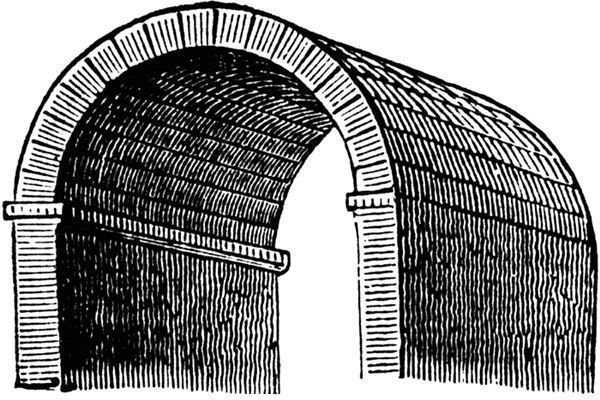
Scientists and artists have always had the same goal: to discover and create something new that is beautiful (Bohm). In the process of creating something beautiful, each has to channel a bit of their counterpart. For example, look at the barrel vault above( a staple in ancient architecture). While the vaults were used to create beautiful buildings, the building was made possible due to the physics which make the vaults possible. How exactly this works can be read here. There are also plenty of examples of how art can be used in science or how parts of science can be considered an art.


Seeing how art and science have been intertwined from earlier ages, I disagree with Wilson's assertion that artists are now eager to utilize new technology and science to help create new artworks (Wilson). Here is where I believe the idea of two cultures originates. When there is a lack of understanding of science's and arts' subtle interaction, the two cultures are further separated. However, due to recent attention that technology/science and their artistic capabilities have received in the media, the relationship between art and technology/science is being further examined by the general public. This can be seen in one of the more popular technologies recently, the 3D printer. It has been coined as one of the most expansive and innovative technologies for designing art objects (Art and Science Journal). Tangible, popular technology/science that the general public can understand and interact with will be the key to continue building the bridge being constructed between arts and sciences (Vesna).

Sources


Snow, Charles Percy. The two cultures and the scientific revolution: the Rede Lecture 1959. University Press, 1960.


Bohm, D. "On Creativity." Leonardo 1.2 (1968): 137-49. JSTOR. Web. 4 Oct. 2013.


Wilson, Stephen. "Myths and Confusions in Thinking about Art/Science/Technology" College Arts Association Meetings. 2000. Web. 04 Oct. 2013.


"Build and Repair: 3-D Printing As We Have... | Art & Science Journal." Art & Science Journal. Art & Science Journal, n.d. Web. 05 Oct. 2013.


Vesna, Victoria. "Towards a Third Culture or Working in Between." (2009).